
In the field of mechanical transmission, a universal joint is a general component capable of connecting shafts with different axes to transmit torque and motion. It plays an indispensable role in heavy-duty equipment such as metallurgical, mining, marine and construction machinery. Universal joint manufacturers specialize in the design, production and process optimization of such components. Their core task is to deliver high-precision and highly reliable transmission solutions according to the requirements of varying working conditions.
Universal joints come in a wide variety, among which the cross-shaft universal coupling is a common structural type. It relies on cross shafts and bearings to realize power transmission between two axes within a certain deflection angle, and withstands large torque and impact loads. Drum gear couplings are suitable for scenarios with high torque and large deflection angles, while elastic couplings (such as jaw-type and pin-type couplings) can absorb shock and vibration to protect equipment. Universal joint manufacturers need to select or design appropriate types and specifications based on specific equipment parameters, including rotational speed, torque, installation space and deflection angle range.
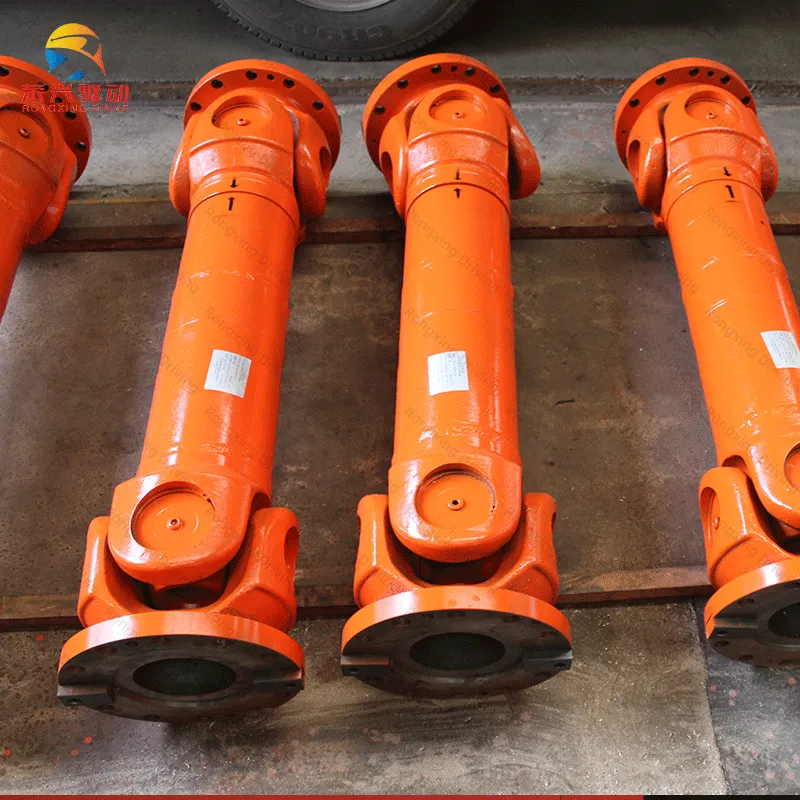
Processing technology serves as a key indicator for evaluating the technical strength of universal joint manufacturers. CNC machining centers are widely adopted in modern production. With 3D modeling and programming, precision machining of complex curved surfaces of yokes, flanges and other parts can be completed in one setup, guaranteeing the fitting accuracy between components. In terms of welding technology, automatic gas shielded welding can effectively control weld quality and reduce deformation. These processing methods directly determine the service life and operating stability of universal couplings.
Quality control constitutes the core competitiveness of universal joint manufacturers. Starting from raw materials, high-quality alloy steel (such as 42CrMo and 35CrMo) can obtain required mechanical properties after forging and heat treatment. During processing, dynamic balance testing, torque testing and other procedures help detect potential defects in advance. For instance, imbalance of a universal joint during high-speed rotation will trigger vibration and noise and shorten bearing service life. Therefore, professional manufacturers are equipped with complete testing equipment to ensure all delivered products meet technical standards.
In terms of industrial applications, universal joint manufacturers are often required to provide non-standard customization services. Equipment working conditions vary drastically among different clients: some demand ultra-long telescopic travel, some require special corrosion-resistant coatings, and others have strict constraints on space layout. Manufacturers with R&D capabilities can rapidly match solutions through parametric selection systems and even jointly develop new products with customers. This service model effectively reduces customers’ risks in component selection and subsequent maintenance costs.
After-sales service also reflects the overall capability of universal joint manufacturers. Industrial equipment shutdowns can lead to massive losses. A sound after-sales system generally includes pre-sales technical survey (measuring installation dimensions and assessing load conditions), in-sales progress updates (allowing clients to participate in acceptance of key processes), and rapid after-sales response (telephone guidance or on-site troubleshooting). Sufficient stock of spare parts for core components such as cross shafts and bearings helps shorten maintenance cycles. Regular follow-up visits and lubrication maintenance recommendations contribute to extending the overall service life of equipment.
From the perspective of industrial development, the technical upgrading directions for universal joint manufacturers mainly focus on high torque density, lightweight design, long service life and intelligent monitoring. For example, finite element analysis is used to optimize cross shaft structures so as to transmit greater torque at the same weight; alternatively, sensors are introduced to monitor bearing temperature and vibration to enable predictive maintenance. Such innovations make universal joints more than just mechanical connectors, but important guarantees for the reliability of transmission systems.
Overall, universal joint manufacturers support the efficient operation of numerous industrial sectors with professional product processing, rigorous quality control and comprehensive technical services. Understanding their technical connotations and industry roles helps users make more rational decisions in equipment selection and maintenance.